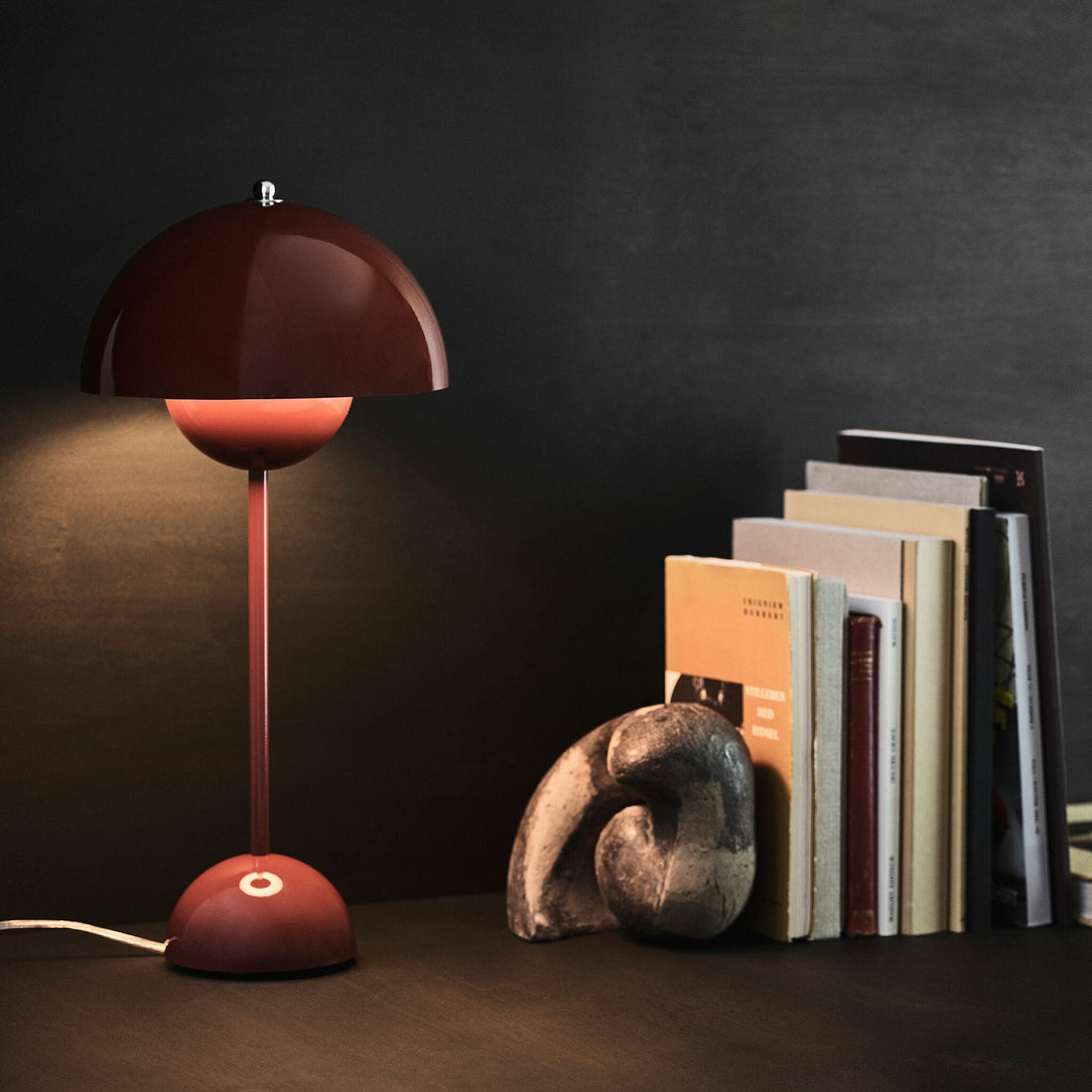
You're seeing them everywhere right now – dark walls. Navy, charcoal, black and the like are hugely popular at the moment. But to make a room with dark walls really look good, there are a few things to bear in mind. We share the tips and tricks that will help you get dark walls just right.
What to consider when decorating with dark walls:
- How dark colours affect mood
- Dark walls in small rooms
- The colour of your furniture
- Wall decoration ideas
- Interior styles for dark walls
- What if my floor is dark too?
- Frequently asked questions
How dark colours affect mood
The colour of a room has a big influence on how we feel. Many people think that a white room lifts the mood and a dark room dampens it. But that's not quite true. Take a white room with white furniture, for example. It may look clean and elegant, but it can still feel sterile and cold.

And what about dark colours? Contrary to what you might think, dark walls often create cosy retreats where you feel particularly sheltered. For this to work, choose a dark colour with a warm undertone – for example, a dark grey with a red undertone.

Can you have dark walls in small rooms?
The answer is yes. But you should paint the long wall dark, not the short one. The dark colour emphasises the long wall and makes the room look bigger. If you paint the short wall dark instead, it becomes the focal point and the room looks smaller.

And what about the ceiling? Ideally, it should stay light too, as a dark ceiling can quickly make a small room feel oppressive. With the right lamp, you can also add bright accents that contrast with the dark walls.
The colour of your furniture
When choosing furniture, contrasts work well. Complementary colours and light cream tones are ideal for furniture placed in front of a dark wall. To find out the complementary colour of your wall colour, simply take a look at the colour wheel.
The colour opposite your wall colour on the colour wheel is its complementary colour. For a navy wall, that would be orange – a rug with orange tones, such as the Piana rug by HANA, would work well here, for example.

Of course, the room shouldn't consist only of orange and cream pieces – that would be a bit too much. That's why, alongside complementary colours and cream tones, you can also add a few pieces of dark wooden furniture. They loosen up the look and add cosiness.
Colours close to the complementary colour on the colour wheel also work well. For a harmonious look, you should also include some furniture in the same colour as the walls.
Wall decoration ideas
A gallery wall looks particularly striking against dark walls. It works best with light or colourful pictures, because anything light or colourful stands out against a dark background. For colourful pictures, you can again go for the complementary colour or related shades.

Just as with furniture, make sure your wall decoration doesn't look too matchy-matchy – otherwise it can quickly look contrived. A good mix of light and colourful pictures helps avoid this. Metallic or wooden picture frames are ideal.
Interior styles for dark walls
Once you've decided on the colour of your furniture, there's still the question of which interior style suits dark walls best. There are various options, and ultimately it comes down to personal taste. Colonial style, shabby chic and classic country style work particularly well, though.

All three use lots of wood and plenty of cushions, rugs and floor lamps – things that make a room cosy. A minimalist interior style is less suited to dark walls, as it often lacks cosy elements, and too much empty space creates a sterile vibe.
What if my floor is dark too?
A dark floor is no obstacle to dark walls. On the contrary, it can look really good. With a few simple tricks, you can make sure the room doesn't look too gloomy despite the dark walls and floor. A few light-coloured rugs work wonders here: they brighten up the room and make it cosy.
Another tip: ideally, paint the wall with the windows in a light colour. The light colour creates the impression that the entire wall is a source of light, not just the windows. If you're feeling bold, you can paint all the other walls dark, which makes the light window wall the highlight of the room.

A mirror on the wall opposite the window also helps make the room brighter, as it reflects the light from the window.
Frequently asked questions
What should I bear in mind when painting?
To make sure the wall is the same colour all over, avoid mixing the paint yourself. It's best to go to a DIY store and have the paint mixed for you, or buy ready-mixed paint. When buying paint, make sure all the tins come from the same batch.
For an even result, apply the paint in vertical strips. Once the wall is finished, you can apply a second coat if needed.
Which wall colours are on trend right now?
Atmospheric dark green, harmonious navy and dark mixed shades such as aubergine are particularly popular at the moment.
Matt or gloss?
If you choose a dark wall colour, it's best to go for a matt finish. That way, corners where it meets a light wall won't stand out unpleasantly, and the two contrasting colours will blend harmoniously. The light wall should then also be matt, so that the room looks cohesive.
We hope this article has given you plenty of inspiration – have fun redecorating your walls.
Guest post by Anne Catherine Bierbrauer