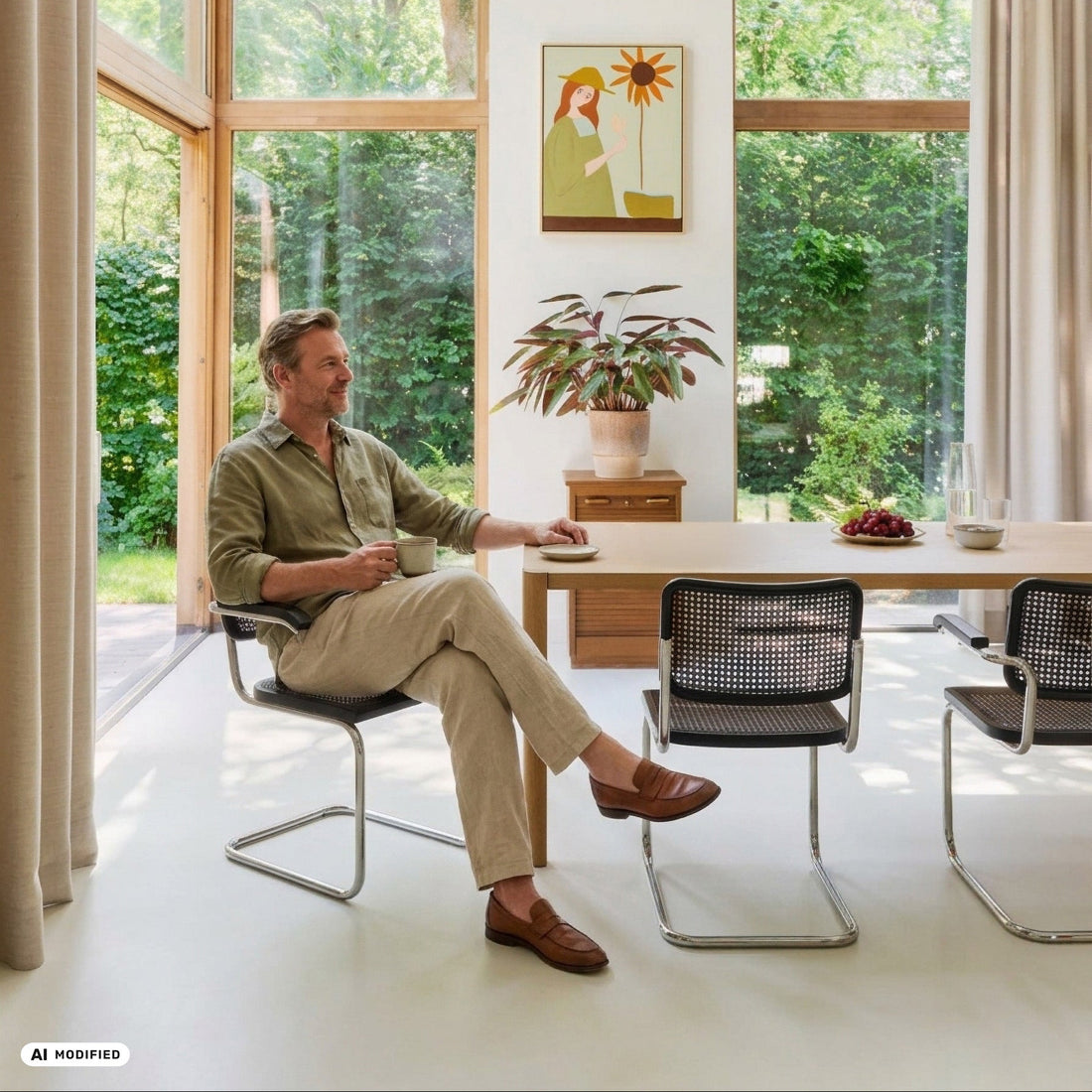
A stay at a good design hotel always feels a little magical: warm lighting, carefully chosen materials and calm in every detail. Everything seems natural, well thought out and harmonious. You can create exactly the same feeling at home – with just a few deliberate choices.
Audo House in Copenhagen in Denmark offers plenty of inspiration. It's a place where design, hospitality and architecture come together. Here, Audo Copenhagen shows how understated design can create an atmosphere that achieves more than any decoration.

At a glance:
- The secret of design hotels: atmosphere through restraint
- Audo House – where design comes to life
- Hotel-style living at home – 8 styling principles
- Audo's philosophy: design that connects
The secret of design hotels: atmosphere through restraint
What makes design hotels so special isn't abundance, but precision. Every object has a purpose, and every tone and texture is carefully matched.
This approach follows the principle of "less, but better" – a philosophy deeply rooted in Scandinavian design.
Rather than overfilling rooms, the focus is on a few carefully chosen elements that are given space to make an impact. Materials such as stone, wood, glass and textiles enter into a dialogue – subtle, yet present.

Audo Copenhagen is a master at striking this balance between function and emotion. Its designs are pared back but never cold; they create warmth through proportion, texture and light.
One example is the Plinth Table. Made from fine marble, it shows how a piece of furniture can be both powerful and restrained. Its geometric form is perfectly self-contained – a statement piece that doesn't shout, but quietly convinces.
Audo House – where design comes to life
In the north of Copenhagen, you'll find a special place: Audo House. It's a hotel, showroom, restaurant and community space all in one – a place where design isn't just displayed, but experienced.
The rooms are decorated in warm, light tones. Lime plaster meets linen, and oak meets marble. Large windows let in soft light that falls across textured surfaces. Everything feels effortless – but behind this calm lies careful design.

The atmosphere comes from restraint. Rather than relying on spectacular effects, Audo House trusts in the power of detail: the play of light and shadow, and the interplay of material and form.
At Audo House, you can feel that design isn't decoration – it's atmosphere.
Hotel-style living at home – 8 styling principles
You don't need a complete renovation to bring the feel of a design hotel into your own home. It's about attitude, not square metres. These eight principles will help you bring Scandinavian understatement into your home, so you can enjoy hotel-style living every day:
1. Combine natural materials
Design hotels thrive on contrasting materials – cool stone meets warm wood, frosted glass meets coarse linen. This interplay creates both depth and calm.
Tip: Choose a few high-quality materials and repeat them consistently throughout the room.

A marble coffee table such as the Audo Plinth, combined with an oak chair or linen sofa, creates balance. The result is an ensemble that feels timeless rather than random.
2. Use light to set the mood
Nothing shapes the atmosphere as much as light. Instead of a single central ceiling light, design hotels use several soft light sources: floor lamps, table lamps and wall lights that define different zones.
Tip: Use dimmers and warm light colours – 2,700 to 3,000 kelvin feels particularly homely.

The JWDA Table Lamp and Audo's Hashira Collection are prime examples of atmospheric lighting. They create soft transitions between light and shadow – just like a hotel room shortly before you fall asleep.
3. Limit your colour palette
While trend colours come and go, one thing stays constant: the power of neutral tones. Light greige, off-white shades and warm taupe create a backdrop for a calm feel. Dark and earthy tones work, too – just stay within one colour family.

Tip: Use colour to calm a room, not to dominate it.
A tonal scheme – with walls, curtains and rug in the same range of shades, for example – lets the furniture stand out subtly.
4. Focus on the function of your furniture
In good hotels, every piece of furniture is functional, too. It's there to be used, not just admired.
Tip: Choose furniture that's both practical and beautiful – true luxury lies in how naturally it fits into everyday use.
Take Audo's Co Chair: a chair with fine lines and a well-considered ergonomic design. Or the Afteroom Bar Chair, which combines graphic clarity with lightness. Everyday objects become part of the overall aesthetic.

5. Let the architecture show
Design hotels often show plenty of "space" – they don't hide it, they emphasise it. Freestanding furniture and clear sightlines create a sense of generosity. Allowing deliberate empty space gives you room to notice what's there.
Tip: Never place furniture too close to the walls, and keep surfaces clear.
Tables and sofas stand out especially well when they have room to breathe – your eye can wander without getting caught.
6. Furnish and decorate less, but with intention
Design hotels never feel cluttered. They follow a clear line: a few carefully placed objects tell the story of the room.
Tip: Tidy up regularly and clear surfaces of anything superfluous – to make room for the things that matter.

An empty side table with a vase or a stack of books makes more of an impact than ten small accessories. Instead of random decorations, choose personal pieces with meaning, such as a work of art, a special find or a favourite photo. Objects such as the Kubus candle holders add accents – subtle, but full of character.
7. Create calm with textiles
Textiles are the key to softness – they absorb sound, add comfort and complete the room. Take a look at our article on layering, too.
Tip: Choose natural fabrics such as wool, linen and cotton in muted tones.

A large rug anchors furniture in the room and creates visual calm. Throws or curtains complement the architecture without becoming too loud.
8. Make room for sensory details
A room only comes to life when it appeals to all the senses. The scent of a candle, the feel of a cup in your hand, the quiet ticking of a clock – these details add emotional depth.

Tip: Add sensory touches to your interior.
Candles, subtle room fragrances or a tray with a glass and carafe on the table add warmth without overwhelming the eye.

And finally: look at your home as you would a hotel room – every object should have a reason to be there.
Audo's philosophy: design that connects
What defines Audo isn't just its aesthetic, but the attitude behind it. The brand's designs connect space, people and objects in a natural way.
Nothing is intrusive, and nothing is accidental. It's not about show, but about stillness – the art of creating spaces where you instantly feel at ease.
At Audo House, this philosophy comes to life: architecture merges with interiors, and craftsmanship with atmosphere. Every room invites you to pause – exactly what good design is about.
In conclusion
Design hotels don't feel luxurious because they're expensive, but because they're thoughtfully designed. With the right materials, light sources and furniture, you can create the same feeling at home.
Audo Copenhagen shows that true elegance is quiet. That understatement doesn't mean going without, but choosing quality. And that the spaces that radiate calm are the ones we most want to stay in.
Bring this atmosphere into your own home – and enjoy hotel-style living.