Trine, let's start with a difficult question: the Cambridge Dictionary defines art as "the making of objects, images, music […] that are beautiful or express feeling". That sounds very vague. Would you try your hand at a definition?
Art is a broad term, which is why there can't be one correct definition. For me, a work of art differs from a crafted product in that it's made without the intention of being used for anything. When a work of art also has a practical function, we call it craft. One example is a one-of-a-kind cup by a craftsperson, which quite naturally combines design, art and functionality.

As the founder of one of the most popular Scandinavian interior design companies: would you say design is possible without art?
I've always found art and the artistic very inspiring and rewarding. In my opinion, art and design draw on each other. I imagine them as two intertwined beings dancing together, exploring each other and testing their limits.

So would you call yourself an artist too? And do you think you need artistic talent to get a foothold in the design world?
No, I don't consider myself an artist at all – for the simple reason that producing several products with the same design, as Ferm Living does, can never be art. But that doesn't rule out that the creative design process itself can have something very artistic about it.

The Ferm Living website says that the process of creating new products is based on "the art of balance". Can you explain that in more detail?
Developing new product collections is an art of balance. Finding the right balance between the creative and the structured, the artistic and the calm, the beautiful and the functional is the most important and most difficult task we have.
Who works together in the Ferm Living design studio? And what comes out of these synergies?
We're all different, with different backgrounds and different skills. One comes from textiles, another has worked a lot with lighting, another is an interior architect. I come from graphic design myself. Our design team also works closely with the category managers, who add a commercial, operational perspective.

What unites us is our values. We see our differences as a strength. We always try to combine and balance the creative with the functional and the responsible.
How do you personally approach a new design?
I think it's important to have an idea or an inner image in mind first, before we can go into production. Most of the time I already know quite precisely what the product should look like in the end. Then I try to describe to one of the designers what I have in mind. Or I sketch my idea on a sheet of paper that I can then pass on.

What kind of art do you like, and is there perhaps an artist who serves as a role model for you?
I'm mainly interested in contemporary art in terms of what we buy and surround ourselves with at home. But in reality I appreciate all kinds of art in different forms: paintings, drawings, photography, ceramics and so on. I'm a big fan of sculpture, because the three-dimensional aspect fascinates me.
One artist I find very inspiring is Sonja Ferlov Mancoba. She was a Danish-French sculptor whose work includes paintings, collages, drawings and sculptures. She began her life as an artist in the mid-1930s and never stopped creating new work until her death in 1984.
Art objects are always associated with words such as "uniqueness" or "one of a kind". How does that fit with possible series production for you?
A design can have a unique expression even if it's mass-produced. But it can never be one of a kind - that's a big difference.

The Ferm Living range includes many products, such as the Moire vase or the Erode candle holder, that symbolise the fusion of functional object and art object. Would you say that the old principle of "form follows function" runs counter to this?
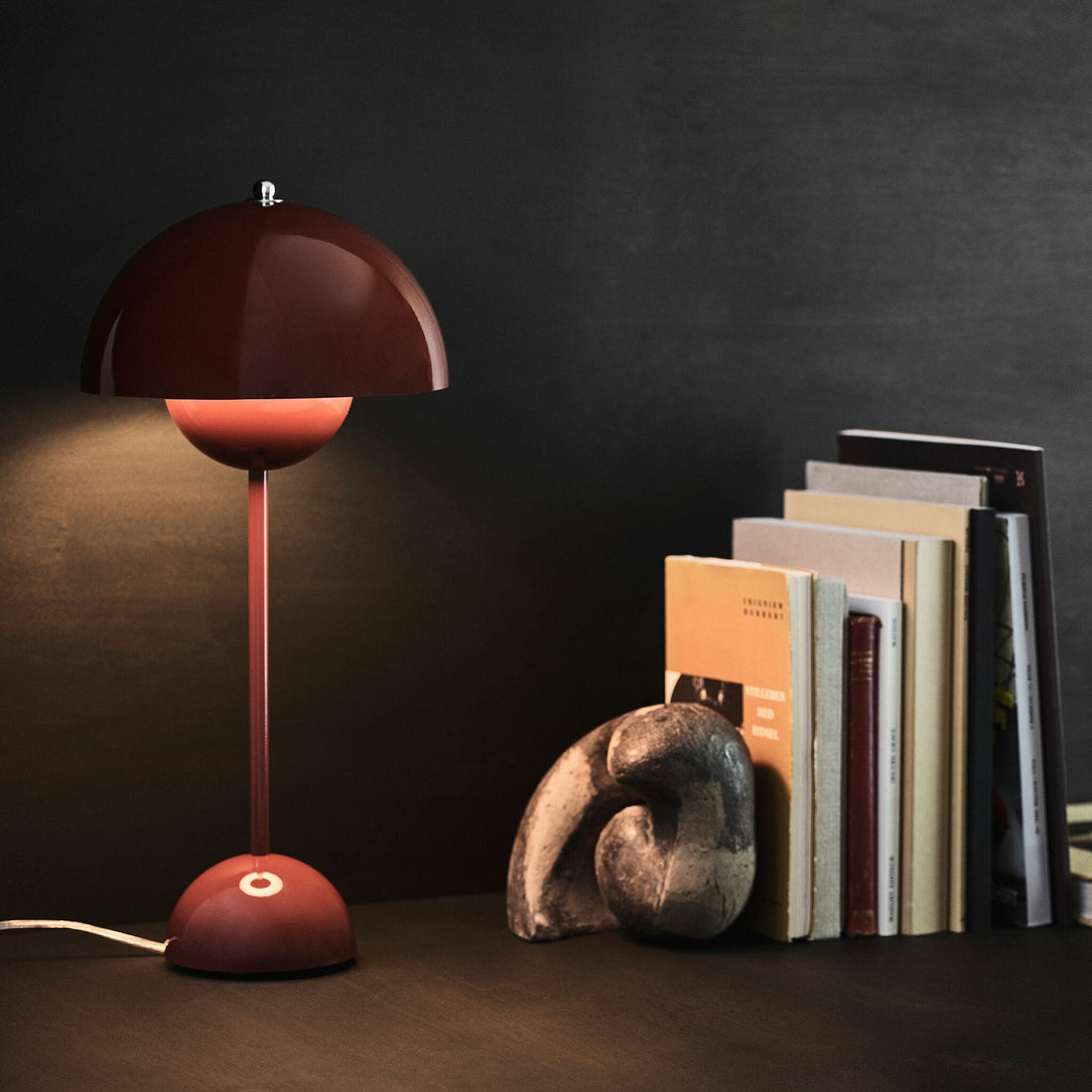
It's true that the guiding principle that an object's form should primarily serve its function can be called into question in these examples. You could argue that the sculptural and artistic expression comes before the function of the vase or candle holder. However, I'm one of those people who often prefer the look of a vase without flowers - that way it almost becomes a sculpture.

Can you tell us which products put aesthetics before practical use for you?
That's probably true above all of accessories and certain kinds of decorative lighting. With furniture, lamps and textiles, functionality has to come first, which naturally limits artistic freedom.
When we spoke to you in 2020, we admired your feel for art and interiors in your home. How has that style developed over the past few years?

My style – or rather our style, because my husband shares my passion for interiors – is almost the same as it was two years ago.
We've acquired a few more works of art that make a wonderful mix: an old French bronze sculpture, a large freestanding flower sculpture and a large, colourful cardboard collage. We buy and curate art with our hearts. For me, it's an intuitive process, and I value it when something speaks to me.
Thank you, Trine. We're already looking forward to the next artistic designs from Ferm Living.
Find your new favourite piece from Ferm Living here:
This article first appeared, along with other fascinating interior stories, in the current issue of Visionary Magazine.