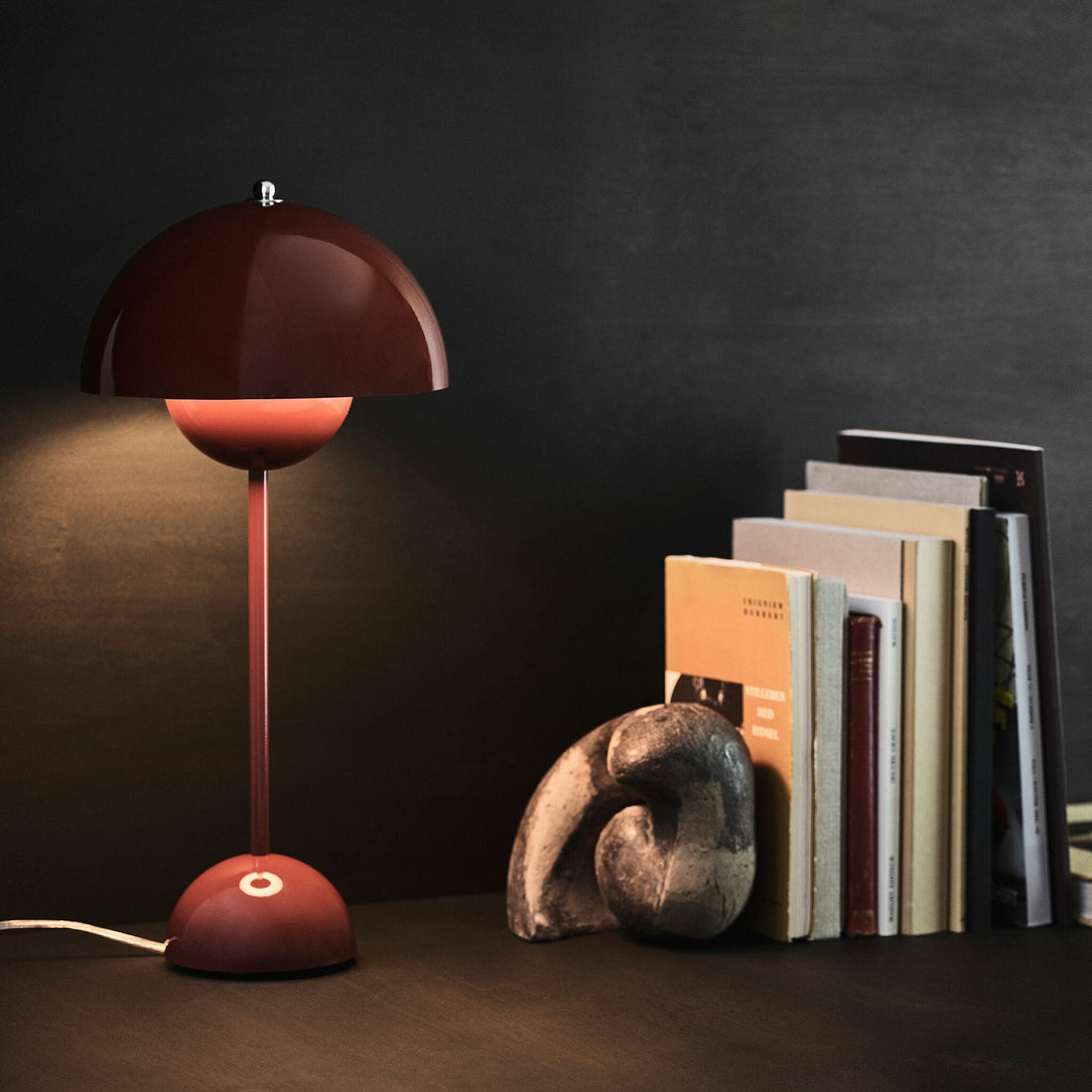
Trine Andersen is the founder and art director of Ferm Living – one of the most popular and successful Scandinavian interior brands. We were invited to look around her beautiful home, a yellow-brick house north of Copenhagen, and talked to her about her personal dream home, successes, challenges and visions for the future. Enjoy these fascinating insights in our magazine!
Trine, tell us about your current home. Where exactly do you live, and who with?
We live north of Copenhagen in Skovshoved, in a yellow-brick house from 1960. "We" means my husband Martin and me, our five-year-old daughter Sage and our twelve-year-old son August.

How would you describe your personal interior style?
Of course, we have lots of our own Ferm Living products at home. But alongside them, you'll find what I would call an eclectic mix of everything – from art to iconic design classics, things our children have made and vintage finds. We love old and new, the simple and the things that ask a little more of the eye.

We think a lot about how to balance our style, both in our collection and in our own home. Overall, there's a very clean Scandinavian aesthetic, with a wonderful design heritage and traditions from the 1950s and 1960s. To balance this, we add some bolder statements – elements that are more colourful and artistic. The mix creates a certain energy between the bolder and the calmer pieces.

Do the new Ferm Living designs always move in with you? Do you redecorate often, or do you stick with selected design classics?
The new designs always move in with us too. Most of the time it's actually the prototype of a new design. Our house is a kind of test lab for new developments.
What did your home look like before Ferm Living was founded? Have you always had a knack for beautiful interiors?
Even as a child, I was very interested in interiors – I loved decorating and rearranging my room. I was thrilled when I moved into my first flat of my own. Back then I had to be a little more creative and worked a lot with vintage furniture and inexpensive pieces that I customised. So my style was definitely more playful and more DIY.

How did Ferm Living come about? What was your idea or motivation behind it?
The idea came to me when I was looking for wallpaper for the first house Martin and I bought together in 2006. Because I simply couldn't find the perfect wallpaper, I created it myself out of a personal need. With my background as an art director and graphic designer, I thought it was definitely something I could do.
I work well under pressure and with deadlines, so I made a quick decision, signed up for the Formland trade fair and hoped to convince a few manufacturers to produce my designs – which turned out to be a real struggle.

I've always had a great passion for design and decoration, and I have an urge to do things myself. That, combined with the firm belief that the wallpaper trend I'd noticed was growing but wasn't really accessible in traditional paint and wallpaper shops, made me feel that I should just go for it.
And what was the biggest challenge?
Like many entrepreneurs, I didn't have much money to get my project off the ground at first. I could only afford to have one of my first ten designs printed on real wallpaper. Even so, the response to the first collection was so good that it marked the start of the company we know today as Ferm Living.

With the founding and success of Ferm Living, you seem to be living a real dream. Would you do it all the same way again?
Everything comes at a price. I'm extremely happy and proud of what I've achieved together with the people I've been lucky enough to meet along the way. Of course, some bad decisions have been made over time. With what I know today, I wouldn't do everything exactly the same way.
But you also learn from all the small mistakes you make, and they help shape future decisions. So if you asked me whether I would do it all again: yes, I would.

What would you say makes Ferm Living so successful?
I'd say it's a combination of our ability to design beautiful products and to create a recognisable, distinctive and warm design universe. We also have the ambition and the courage to grow the organisation and develop our in-house skills as our products reach more and more wonderful customers. Ultimately, it's about having good people on board – in my opinion, that's the most important thing in any company.

What does a typical working day look like for you?
My days vary a lot. When I leave the house at around 7.30 in the morning, the day usually starts with phone meetings in the car on the way to work.
When I'm at our office, "The Home of ferm LIVING", my time is mostly taken up with meetings – some operational, others creative. My job title is Creative Director. In short, I have overall responsibility for the creative side of the company, which means the design and the visual expression of the brand itself.
So who takes care of the administrative tasks?
In 2016 we had the opportunity to hire a CEO, Peter Vedel, who is responsible for the operational side of the company (sales, finance, logistics, etc.). I'm very happy to have been able to spend more time on the creative tasks, as for many years I was also responsible for the entire operation. Peter and I have very different profiles, yet we work together very closely and well – and that's exactly why we complement each other so well. It's one of the things I'm very grateful for.

And what does your free time look like?
In my free time, I spend most of my time with our children and friends and recharge my batteries until it's Monday again.
Before the coronavirus pandemic, we travelled a lot, both for the company and privately. That has dropped off sharply over the past six months and made room for projects in the garden and at our summer house. This weekend we're planning a three-day hike with some friends for October – we're really looking forward to it. But I miss getting out, experiencing the world and finding inspiration.
What is your favourite Ferm Living product at the moment?
I have new favourites every season. Internally, we have a rule that we don't launch any products we wouldn't want in our own homes. But of the recently launched products, I particularly like the sustainable Desert Chair, whose cover is made from recycled bottles. I also love the Mineral coffee table with its rough marble edge and the Rotben stool, which is cast from recycled aluminium.

And, hand on heart, are there any designs you don't personally like that still made it into your range?
There are actually some products that we've since cleared out at home because we'd had enough of them. But I liked all of them when we launched them – otherwise they probably wouldn't have made it into our range.
What would you say are the interior trends for autumn/winter 2020?
At the risk of getting a little abstract: I think the pandemic is indeed having a huge impact on future trends – on the way we live and set priorities, and in a way on how we put our entire value system into perspective. It's a great source of inspiration for us, and we work a lot with presence and tactility in our products. Our home is increasingly becoming an anchor and a refuge, where we can be ourselves and adjust to the changes we see coming.

We work a lot with feelings and words – and we try to communicate that feeling through the design language of our products. That's why we now need a calming colour palette in a beautiful gradation from ebony to ivory. We've dared to add a little "poppy red" to give the collection as a whole a touch of optimism and energy. With all materials, we think about honesty, tactility and texture, to get a better sense of what connects us to Mother Earth – which we all want to respect and protect.

And what drives you most?
Our greatest ambition and wish is to add value to people's homes – to enrich and inspire our customers so they can feel at home. A home is much more than just beautiful things. We hope you can see from our collection that we believe a home is a place closely connected to our emotions, values and way of thinking.
In our latest collections, we've worked a lot with the flowing, irregular forms of nature, with tactile experiences and our enduring love of craftsmanship.

You haven't lived in your house for very long, yet it feels incredibly cosy and inviting. How do you create this sense of home and feel-good atmosphere?
I think it's about being able to sense quickly what kind of people live in the house. We're not trying to create a perfect home. We like to surround ourselves with products we like or that have a certain meaning for us. We're interested in art and we're not afraid to mix styles.

I like to challenge myself a little by occasionally adding things that aren't beautiful per se but, in my opinion, give the room an indescribable energy. I don't like it when things get too tidy. We're almost always changing the rooms and the feel of the house, and we love finding things at vintage flea markets, auction houses and art galleries.

Where in the house do you like to spend time as a family?
Our favourite place is the large kitchen-diner. That's where we spend most of our time away from the company – cooking, playing, relaxing and having guests over.

Where do you find inspiration?
The short answer is that you can find inspiration anywhere – in the smallest and most insignificant thing or experience. Of course, I also find inspiration in the traditional ways: by travelling, going to flea markets, reading books and magazines and taking an interest in how we and other people live our lives. Our own needs have been the starting point for many of our product developments.
We're all constantly collecting impressions, and when we brainstorm, we pour our shared impressions of colours, shapes, emotions and words into a big funnel, where they are filtered and refined until a few "pure drops" come out. These then form the basis for the products we design next.

Ferm Living is one of the most popular Scandinavian interior brands, and your beautiful family home seems like a dream come true. What are your next big goals and visions for the future – for the business, for you personally and for the world?
That's a really complex question … But my greatest wish for the future – for myself, our company and the world – is that it is sustainable. Both literally and figuratively.
Thank you so much, Trine, for all the personal insights into your home and your life. We wish you and Ferm Living continued success and look forward to your new designs!