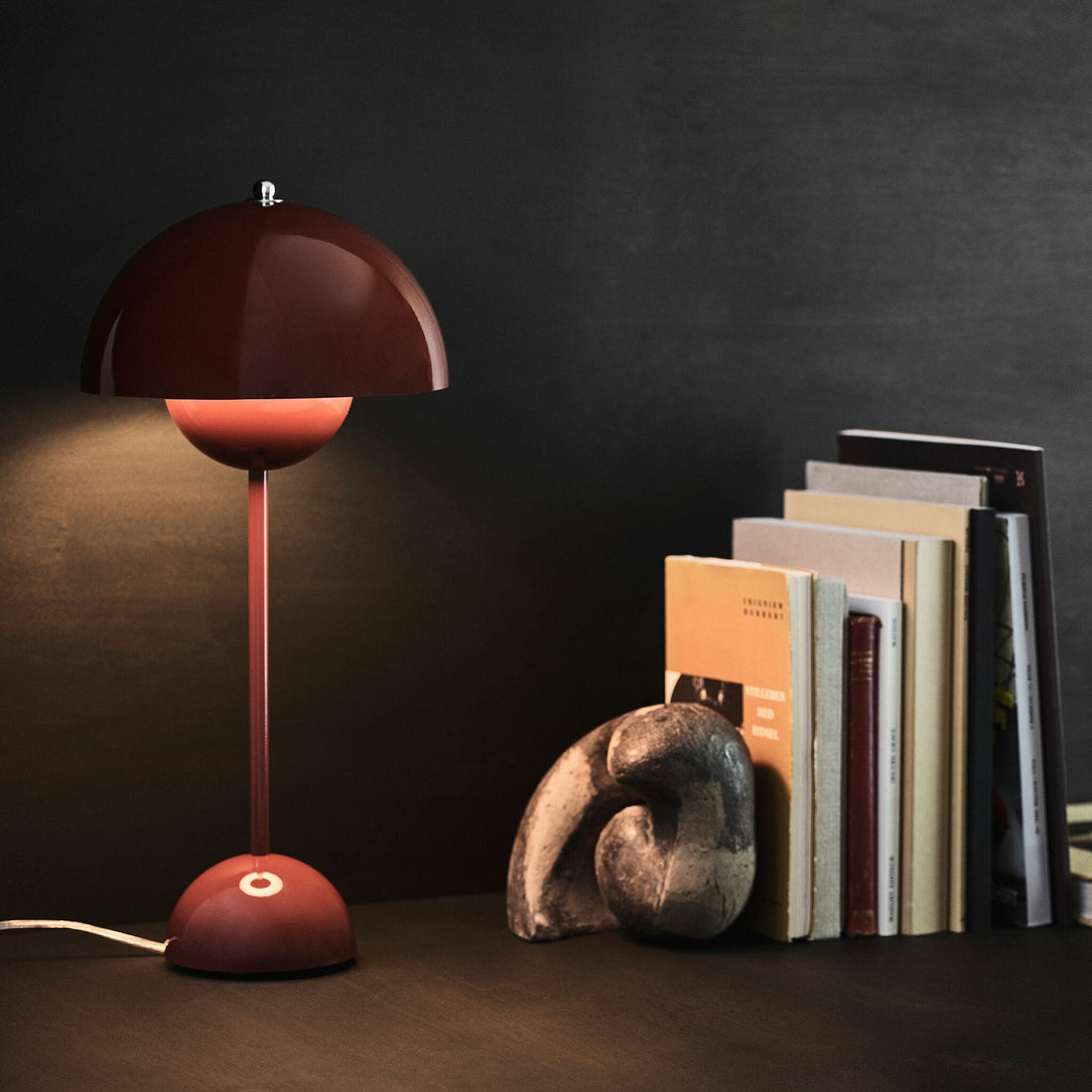
A Danish mother, an architect grandfather and a father who built his own successful furniture brand, Hans Hansen – Gesa Hansen was practically born with a talent for design. Today, she is one of Germany's most successful furniture designers in her own right. We visited Gesa at her French country house and were enchanted by her eclectic interior style.

Job: designer, The Hansen Family
Home: Courances, France
Hobbies: surfing, polo
Interior style: Scandi, Art Deco, modern country
Gesa Hansen in conversation
Why did you decide to swap your Paris flat for a little house in the countryside?
I needed to get my hands in the soil again. And I knew I didn't want my children to grow up in the city. I grew up in the forests of the Sauerland myself, and thanks to the Heershoff family, who have a farm next to my parents, I had a wonderful, wild childhood. I could leave the house in the morning and not come back until the evening, without anyone knowing where I was. Surrounded by animals, dams, rivers and forests. It was simply wonderful … I wanted that for my children too.
Your house isn't just a real gem inside – the garden is enchanting too, with its colourful blooms. Can you describe the scent of your home?
Our garden smells of fresh roses. I love roses more than anything! In France, there's André Eve, a specialist who breeds the best roses. My favourite is "Jardin de Granville" – it's also used in Dior perfume.

In my office, one of my favourite smells, wood, is very present – probably because of all the wood samples. I'm currently working with yakisugi wood, which smells of burnt wood. Maybe that has made the scent even stronger.
My husband, Charles, has several restaurants in Paris, so we have countless different herbs in the garden, and you can always smell them … especially the lavender.
Your interior shows influences of Art Deco, mid-century, Scandinavian design and country style … How would you describe your style yourself?
I tried to respect the soul of the house, but at the same time I didn't want a classic country style. That's why I mixed lots of design pieces from different eras. It makes it look more modern and unexpected. With the colours, too, I made sure not to slip into a white country style. Pure country style can sometimes feel so "inauthentic". I think the house is an absolute reflection of my own style, without falling into one particular look.
The picture above the sideboard is by the French photographer Charles Fréger. Are there other artists whose work you collect or follow?
I love Louise Nevelson, but I was never in contact with her. Charles Fréger and I are very good friends. Other artists I know very well and admire are the pianist Bertrand Chamayou and the jewellery designer Charlotte Chesnais.

Your interior feels so harmonious, yet it has pieces in different styles and from different eras. What tip do you have for anyone who'd like to be a little bolder with their interior?
I really do make a mood board with the different elements every time – it helps with combining them. In the living room, for example, I had the picture by Charles Fréger and used it as the starting point. I chose the furniture and colours based on the picture. The rug, in turn, matches the colour of the red tomette floor tiles. That's how everything comes together.

Do you have a favourite piece of furniture in your home?
If I had to choose, I'd probably say the buffet cabinet. I designed it for my mother, which makes it a little more special to me than other furniture.
In three words: what does home mean to you?
Family, traces of the people I love, and Scottish wool blankets.
Is there a room in your house where you most like to spend time?
My office. Sitting and working among all the different textures simply makes me happy.
What's particularly important to you when designing new furniture?
I don't want to create flashy design. I try to find what is, for me, the perfect harmonious form. It's important to me that a piece of furniture serves its purpose completely.
What exactly fascinates you about being a designer?
Actually, I didn't want to become a designer at all – I wanted to be a graphic designer. What fascinated me most was the layout of the design books at my parents' and my uncle's, even more than the content. It was only when I attended a lecture by Axel Kufus that I understood what a designer's job is. He is, and always will be, my greatest role model.

After studying at the Bauhaus University, you spent two years in Japan. What did you take away from that time?
In Japan, I was fascinated by the tension between tradition and modernity, the incredible devotion to detail and the importance of rituals. I think more and more rituals are disappearing from everyday life these days. With my furniture, I try to bring some of them back.
What would you like to be better at?
I'd like to be even better at drawing. I usually know what I mean, but I can understand that my team sometimes has trouble reading my drawings.
What hobbies do you have besides design?
I surf and I'm passionate about polo, but not on my own horses, so it's no more expensive than other hobbies. Polo sounds extremely expensive, but if you just want to play, you can "borrow" the horses.
What's your next project?
We want to put a sauna in the house. I love saunas! I'm currently working on a project with my favourite sauna company. The design comes out next year.
Thank you, Gesa, for the interview and the insights into your beautiful home!