Congratulations – you've just been made a Commander of the Order of the British Empire. Does such a distinguished honour suit a designer like you, who once wanted to be a rock star and whose designs are widely considered visionary?
It is a very old-fashioned honour, actually – but it doesn't matter. The more established you become, the easier it is to rebel! A little rebellion never hurts.
Since the 1980s, you've mainly designed furniture and lights. How do you stay relevant in the design world for more than four decades – timeless and modern at the same time?
Fortunately, innovation in interiors takes longer than in other creative fields; only architecture is slower. I like that, because I don't want to follow every trend. I also try to broaden my perspective.

I explore materials, technology, manufacturing, human behaviour, art and spaces – but not design itself. Designers should observe the world, not live in a bubble. When it's time to create, I rely on chaos theory: first I make a big mess, stir things up and see whether I can spot patterns emerging. That's the art. The fun. My passion.
That seems to require patience! You've just launched the Groove outdoor metal chair, which took ten years to develop. What happened?

Yes, it was an odyssey, and I experienced and learned a lot along the way. I'd always wanted to make a metal chair for outdoors and initially thought I could have it made to order using high-tech machinery. We produced 300, but the chair was too angular and uncomfortable. When you don't hit the mark, as we did then, you keep trying and learn a lot about the capabilities and strength of metal. And at the end of the journey, you have a comfortable chair. We'll see if all that effort was worth it.
Does the world really need new things when there's already so much overproduction?

It's hard to justify making or buying new things at the moment – sustainability and the circular economy are much more urgent issues than before. But you can make sure a product has as little impact on the environment as possible, is well made and has a timeless style and construction. Then it has a reason to exist. I believe in sustainability through quality. When I see an object I designed 15 years ago in an antiques shop, that also proves its relevance.
You've said that design should make life easier and be kind – to the people you work with, to customers and to the planet. But the world is becoming more complex, and so are the challenges you face as a designer. Do you ever get tired of your job?

No, it's impossible to get bored as a designer. That's why I enjoy the job so much. The great thing about design is that you're always facing new challenges, because the world never stands still. Design is a way to improve life. The right lighting can improve any room; new technologies such as LED make life easier, cheaper and more sustainable. And there's still so much I'd like to design: electronics, toys, houses, entire cities.
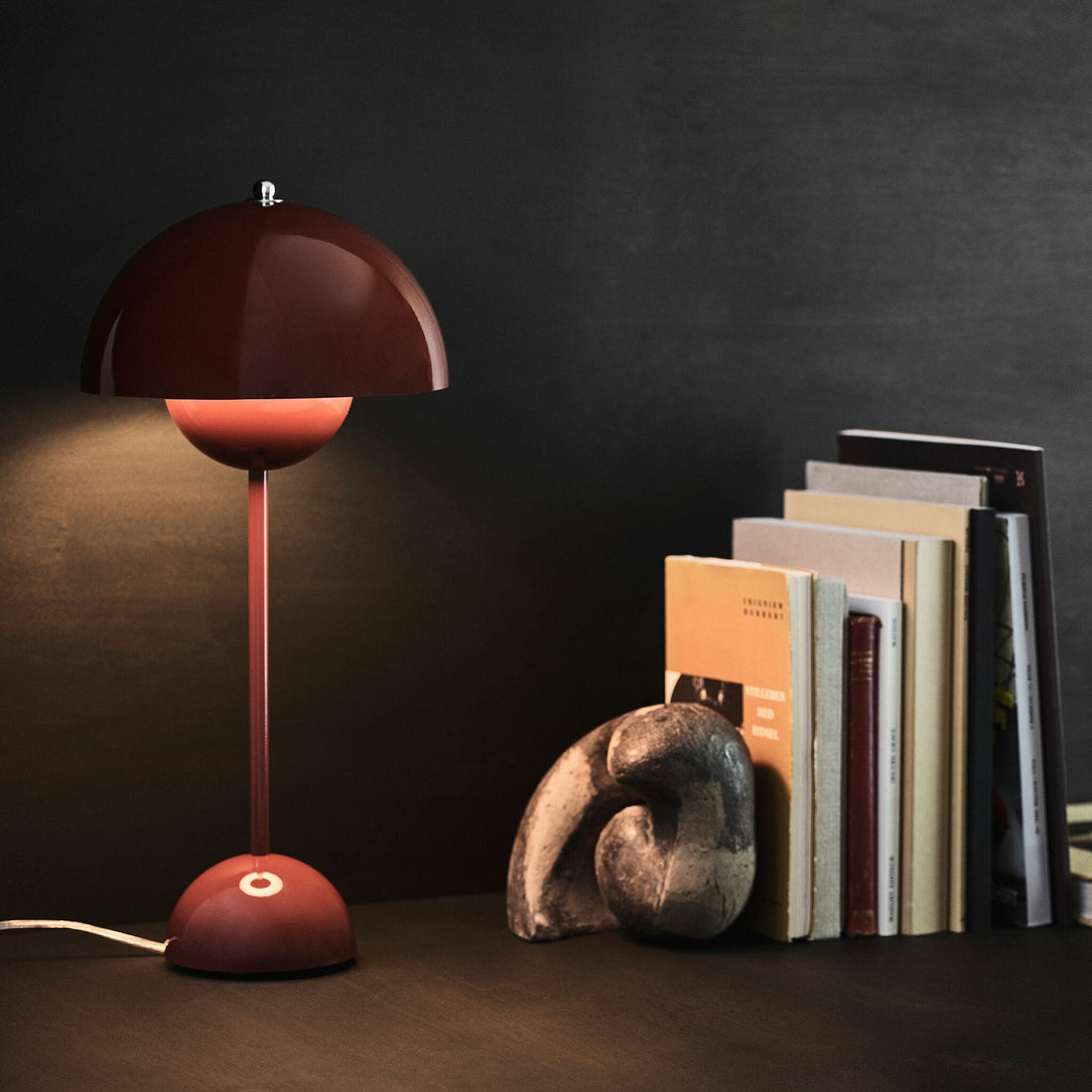
From sex toys to cars, you've designed quite a range of things. But lights are among your most iconic products. One of them, the Beat, has often been copied. Are these cheap versions also proof that your creation is relevant?

In this case, we have our imitators to thank for the relevance. They inspired us to make a cheaper version of our own product – a higher-quality copy of the copy. That's how the hand-hammered brass Beat light led to Unbeaten, made of raw aluminium: a tribute to our copyists with a new aesthetic and functionality. This original is unbeatable.
What is your own home like?
A little boring, eclectic – with as few of my own pieces as possible. I don't need much; I even lived in my studio for eight years, and that was enough. My favourite piece of furniture is my great-grandmother's desk, because it's the perfect size for a laptop and has lots of hidden drawers. She bought it herself in an antiques shop. It dates from 1780s Paris, so it's a good eight generations old.