Luca Nichetto was born and grew up on Murano, a group of islands in the Venetian Lagoon. He's shaped by the design influences of Italy. Today he lives in Stockholm in Sweden and designs furniture for the Scandinavian brand &Tradition, among others. We talked to Luca Nichetto about functional and sculptural design. He also told us how a lollipop, which most of us will remember from childhood, inspired the Lato side table.
Luca, thank you so much for your time!
Did you always plan to become a designer?
I'm originally from Murano, a small island in the Venetian Lagoon that's famous for glassmaking. My friends, relatives, parents and grandparents all worked in the glass industry. So I grew up in a very creative environment – in a way, craft, drawing and design were part of my childhood.
After school, I'd go around Murano with friends, knocking on the doors of different factories to sell our drawings. In the summer months, I took on small commissions to earn some pocket money. But I had no idea I'd become a designer.

So how did you become a designer?
At some point the moment came when I had to choose a career or a degree. I was looking for something to do with drawing or creating. The University of Architecture in Venice in Italy decided to launch a new degree course, and luckily I decided to study design there.
A year before I finished my studies, I applied to various factories in Murano. I got the chance to design my first vase collection for the famous glassworks Salviati.

Where do you live now?
In Stockholm, with my wife Åsa and our two children. I've spent most of my time there over the last three years. Before that, I travelled more, to visit inspiring places and see other, refreshing things.
How would you describe yourself in three words?
You'd have to ask my wife [laughs]. I'm not good at describing myself.
What are you most proud of in your life?
Everything. I'm proud to be a father and a husband – to have started a family and, at the same time, built something in my professional life. I have a happy, fulfilled life.

What's your favourite place in the world so far?
Provence! It's a really, really beautiful place. The landscape, the culture, the food… everything there is simply wonderful. Provence is also very interesting because it's on the other side of the Mediterranean – it's in France, but there are lots of Italian and Spanish influences too. It's like a meeting of three different Mediterranean cultures, which is pretty cool.
Do you create your designs more for other people, or do we find your designs in your own home too?
To be honest, I design for both. Of course, my imagination helps me look for a design that other people might love. I think about others, but I also think that I could be the one who owns and uses this product.

How do you start a new design project? How and where do you look for inspiration?
Well, there's no single recipe. It depends on the company I'm working with. For me, inspiration is really varied. I mean, inspiration can be a book, a film or a song. It can simply be watching people walking down the street. It depends on the focus of the project. Most of the time, it's the project itself that inspires me.
Which interior brands do you prefer?
That's a difficult question. It's like asking a musician about their favourite album. Much more important to me is the song you play together. So it's the whole package that counts. And I really like &Tradition as a brand.

How do you enjoy working with &Tradition? What potential do you see in the brand? And do you think you can bring artistic design into people's homes with &Tradition?
&Tradition has developed enormously and is now a completely different company from when we started working together. I think they have more courage to do things differently. In my opinion, that's exactly what makes &Tradition successful: they step outside the Scandinavian comfort zone. I try to create artistic, bold designs for &Tradition that broaden the brand's portfolio and make it even more interesting.
Which &Tradition product do you particularly like?
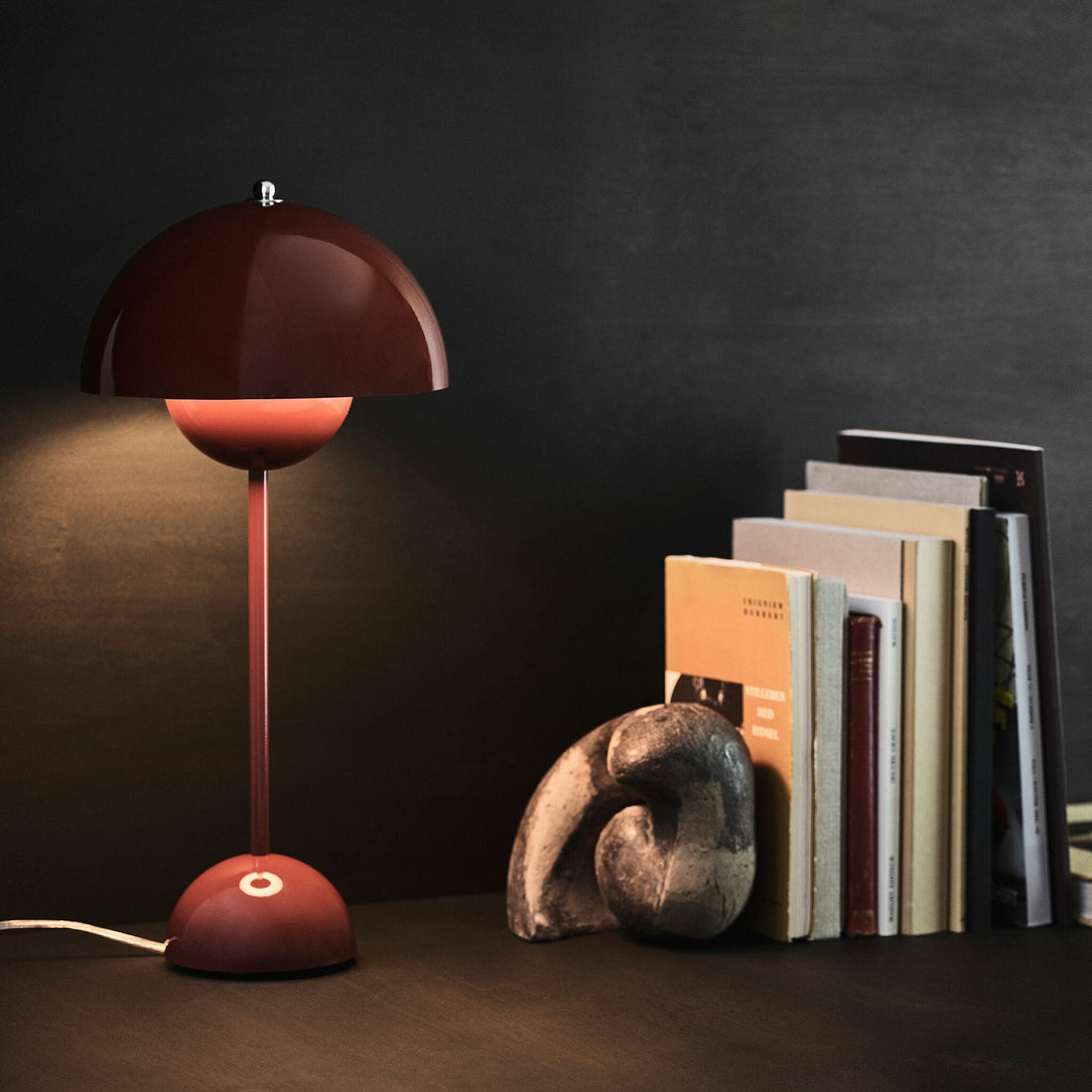
I really, really like the Flowerpot lamp.

Is it this particular product you like, or Verner Panton as a designer too?
I don't just like his designs – I also have great respect for Verner Panton. Products are the result of an attitude, and that's what matters to me as a designer. Products come and go – the designer's attitude is what makes the difference.
Among other things, you designed the popular Lato marble side table for &Tradition. What inspired this design?
I was eating a lollipop, and as I looked at the round sweet on its stick, I thought, "That would make a great piece in glass." Then I imagined turning the lollipop upside down and putting a tabletop on it – and that's how Lato was born. It's a funny inspiration for a side table. Originally the base was meant to be glass, but that turned out to be impossible to produce, so we switched to another material. Altogether it took three years to produce Lato. It was a long journey for such a simple product. But it can be used anywhere, and I think that's why so many customers like this side table.

The side table isn't just functional – its shape makes it sculptural too. Design and art merge here. Can you tell us what appeals to you most about that?
I'm Italian, so for me function, empathy and aesthetics always have to work together. I'm absolutely against purely functional objects. The emotional part always has to be there – that's part of my philosophy. Sometimes I even prefer there to be more emotion than function – products should make you smile.