Somewhere between clear structure and natural wilderness, Alex has created a green oasis of around 700 square metres not far from Greifswald in Germany. Grasses, perennials and fruit trees meet natural materials and carefully designed places to retreat to – always with the idea of giving nature enough space to develop in its own way. Take a stroll with us through Alex's garden and discover an outdoor space that lives and grows with the seasons.
A garden as an extra living space
For many people today, the garden is no longer just a place to tend plants but an extra living space. Breakfast outdoors, a quiet moment with a coffee or a long summer evening under the open sky – the garden adds new possibilities to everyday life.
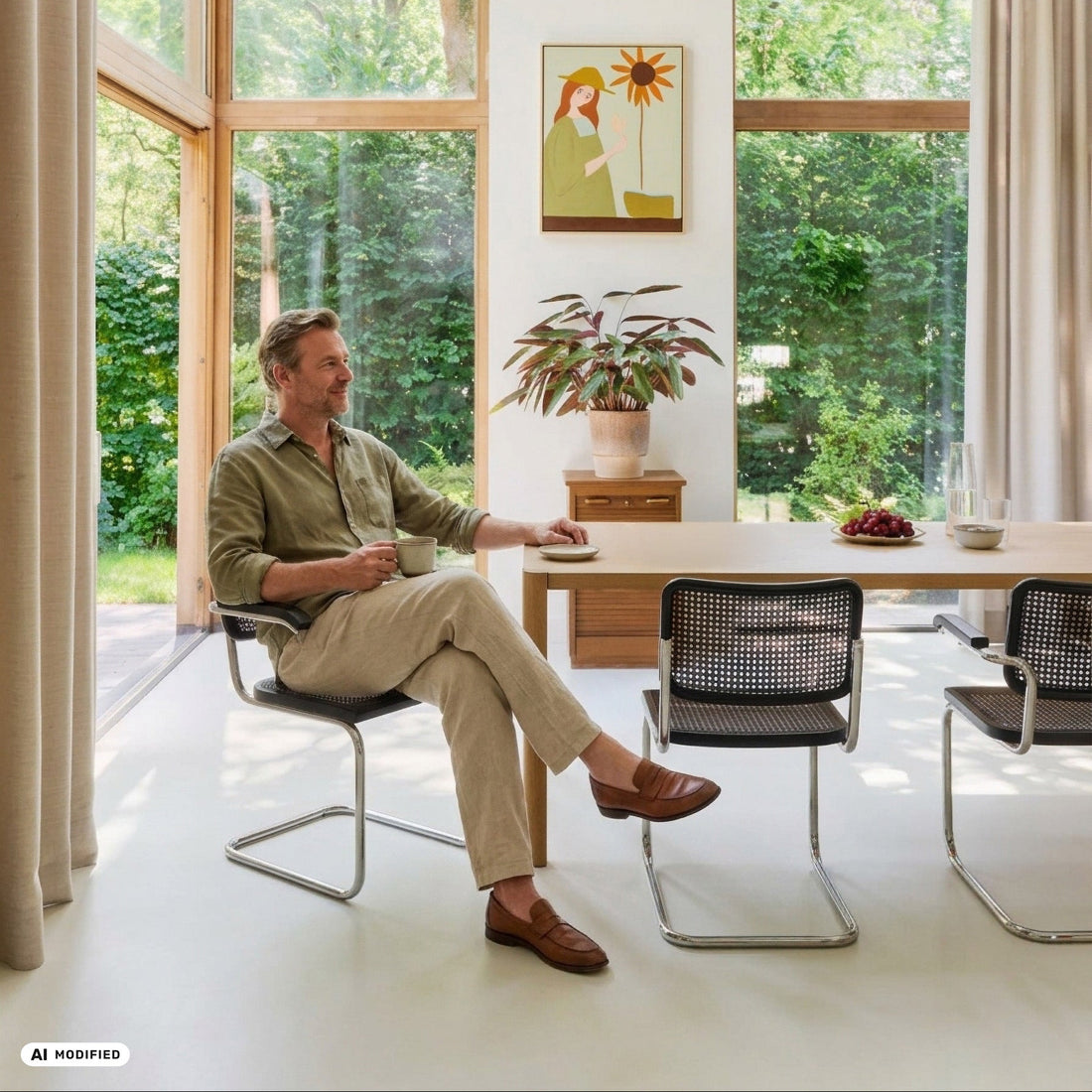
The connection between indoors and outdoors also played an important role in planning this garden. The view of the greenery, direct access to nature and various places to sit make the garden an integral part of the home.
It's not just about space but about atmosphere. Small seating areas, different perspectives and deliberately placed zones create spaces that invite you to linger.

Structure brings calm to a natural garden
A natural garden doesn't mean leaving everything to chance. On the contrary: a clear basic structure is what allows plants and materials to work together harmoniously.
Different heights, paths, sightlines and planting areas create a garden that stays interesting even outside the flowering season.
Long-term planning is particularly important. Trees, grasses and perennials change over the years, giving the garden a living development.
Sustainability as the basis of garden design
A sustainable garden starts with choosing the right materials and plants. The focus is on long-lasting concepts rather than short-lived solutions.
Drought-tolerant plants, natural materials and as little paved surface as possible help to create a garden that works in harmony with its surroundings.
Seemingly small decisions matter too: leaves are left in the beds, natural cycles are supported and plants are given space to develop.
The result is a garden that works with nature, not against it.
Plants at the heart of the design
In this garden, plants play the leading role. Grasses, lavender, fruit trees and perennials bring movement, scent and seasonal change.
A garden becomes especially interesting when it doesn't just work at one time of year. While the first flowers appear in spring, summer plants bring colour and structure. In autumn, leaves and grasses change the atmosphere, and even in winter, shapes and materials remain visible.
A well thought-out garden therefore doesn't rely on flowers alone but on different textures, heights and natural changes.
Places to linger make a garden feel homely
A common mistake in garden design is focusing on decoration before the basic structure is in place. A homely feel comes first from well-planned areas.
A seating area defines a place and gives it a function. It can be a spot for shared meals, a retreat for reading or simply a point from which to enjoy the garden.
Only then do details such as lighting, textiles or decorative elements come in. Less is often more – the plants and surroundings can take centre stage.

The right garden furniture combines comfort and design
Today, garden furniture has to do more than simply be functional. As outdoor areas are increasingly used as living spaces, comfort, material quality and design are becoming ever more important.
The key is a combination of durability and aesthetics. Furniture should withstand changing outdoor conditions while fitting harmoniously into the garden design.
Flexible seating solutions have particular advantages here. Depending on the occasion, areas can be changed and adapted to different needs – from a quiet moment alone to a sociable get-together with guests.

Materials with a natural look
The choice of materials also shapes the atmosphere of a garden. Natural surfaces and durable materials create a connection between architecture and landscape.
Wood, natural stone, metal or mineral surfaces can be combined to create a timeless design.
Deliberately limiting yourself to just a few materials creates calm and stops the garden from looking restless.
A garden that grows with the seasons
What makes a successful garden special is the way it changes. No two days and no two seasons are alike.
Flowers, light, colours and movement constantly transform the outdoor space. It's exactly this dynamism that brings a garden to life.
The best garden design doesn't create a static state but a space that's allowed to evolve.
Nature, design and quality of life
This garden home story shows that an outdoor space can be designed just as individually as a room inside the house.
With a clear structure, sustainable ideas and a considered approach to materials, you can create a garden that doesn't just look beautiful but feels good too.
Because in the end, a garden isn't just a collection of plants and furniture. It's a place for memories, calm and the small moments of everyday life.