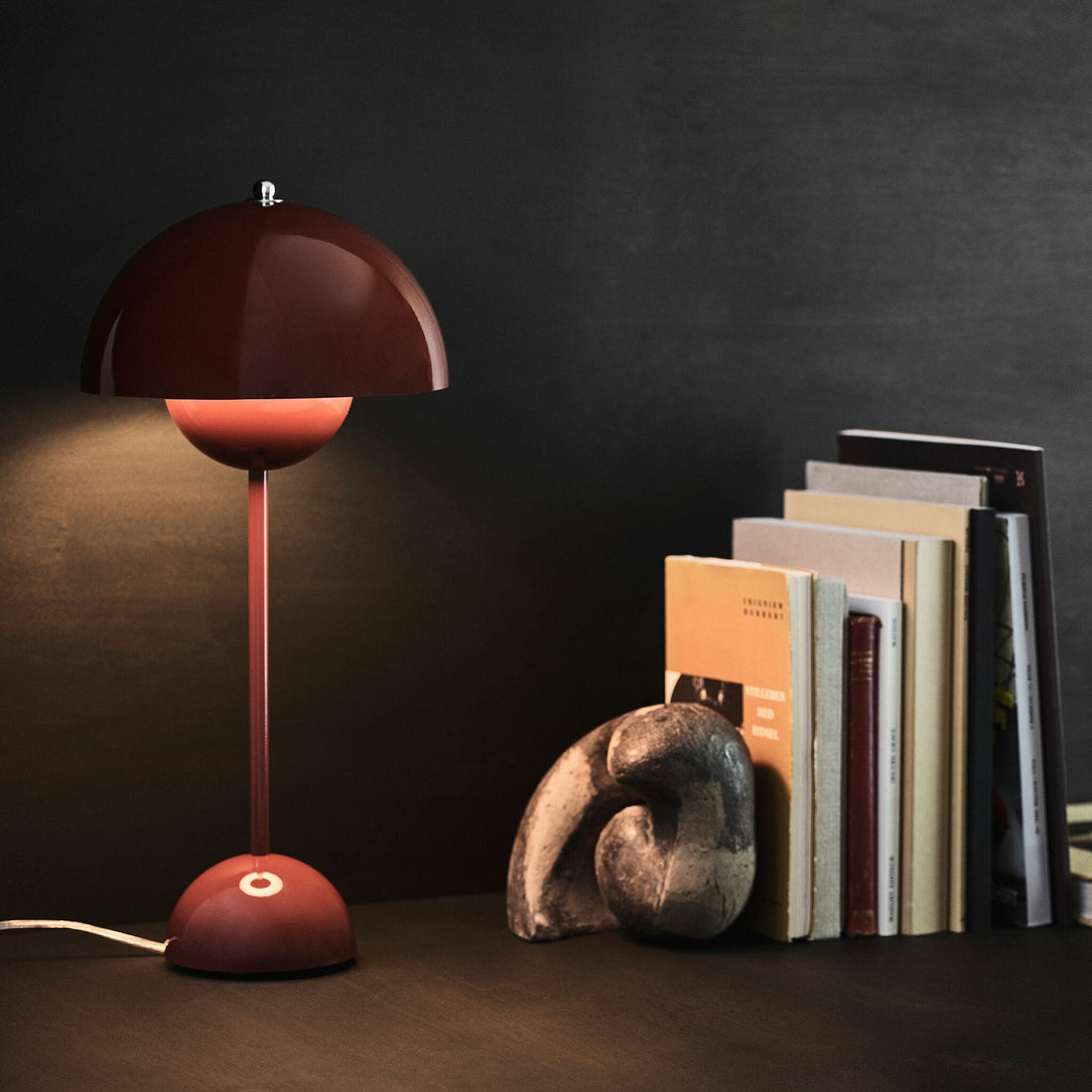
French artist Kethevane Cellard is known for her naturalistic drawings and wooden sculptures. She lives and works in a suburb of Paris in France. Together with Ferm Living, she gives us an insight into her artistic work and her home – two subjects that seem to merge in her life. Kethevane lives in an industrial loft-style house that was originally built, more than a century ago, as a woodworking workshop.
Kethevane, thank you so much for your time!
You're a successful artist. Has your style changed over the course of your career?
After graduating from art school, I worked as a graphic designer for almost 15 years while trying to find my artistic voice. I drew and painted for years, but somehow I was never happy with the results. In 2015 I started carving wood for fun and was hooked straight away. Something clicked in my imagination, and I began sketching shapes I wanted to make.

What does art mean to you?
My artistic work is shaped by slowing down. For me, art is about taking your time and finding the right approach. When I'm searching for shapes, I have to be in a positive frame of mind.

Your drawings are quite restrained and naturalistic, while your wooden sculptures are expressive and have a strong presence. Where do you find your inspiration?
I read or listen to books, articles and podcasts on a wide range of subjects, such as history, economics and science. I think we still have so much to learn from plants, animals and fungi. I'm also very interested in the history of humankind and draw on the vitality of prehistoric art and tool shapes.

What does the journey from idea to finished artwork look like?
In my studio, which is also my living room, there's a large pinboard. To visualise the next steps and the shapes I want, I pin everything to this board. Then I calmly start designing new shapes with a fountain pen or carefully carving them in wood with gouges.

Where and with whom do you live?
I live with my husband, my two sons and two cats in Arcueil in France, a suburb of Paris. You almost forget you're in the city, even though it's only 15 minutes from central Paris by metro.

What was important to you when you were looking for a home?
Because I spent much of my childhood in the French countryside, it's important for me to be surrounded by plants and greenery. Our house is set back from the street in the middle of a block, and over the years we've planted lots of plants, vines and a few trees. Now we have lots of birds and insects in the garden, as well as a pond that's home to more than three dozen goldfish. The garden has become our refuge from hectic city life.
What do you particularly like about your house?
It was once a woodworking workshop. Shaped by its industrial past, the house has dark brick, steel beams and skylights that let in enchanting rays of sunlight throughout the day.

Where's your favourite place to be at home?
The heart of the house is the large open space we use as a living room. I love sitting here among cosy cushions, watching the trees sway in the wind, or curling up with a cup of tea in my favourite corner by the wood burner.
How would you describe your interior style?
I look for timelessness in the furnishings I bring into my home – even with modern objects. The texture of materials is also crucial for me: there have to be tactile elements, and I always welcome imperfections.

You have a beautiful art collection. How did it come about?
I've either swapped the works I own with other artists or bought them from them. My collection consists of prints, a few originals, ceramic pieces and works on paper. The way I've arranged them in my home is subjective. They simply feel right together, as if they were in conversation with each other.

What does home mean to you?
For me, home is a place where I can find peace and quiet. But it should also be a place where friends are welcome. Both are equally important to my sense of home.
Shop the look
Thank you so much for these fascinating insights!