Making a new-build home feel cosy is often a tricky interior challenge. In Sabrina from the Instagram account @dasmassivholzhaus, we found an inspiring woman who has done exactly that in her own home – and done it remarkably well. We visited Sabrina in the modern solid-wood house she designed herself near Vienna in Austria. Get inspired by Sabrina's home story.
Sabrina, tell us a little about yourself.
My husband, our three-year-old daughter Rosa and I live just outside Vienna in a solid-wood house next to the forest, where we sometimes get to watch the deer. My creativity is reflected in my work: I'm an art historian and interior designer, and I've been self-employed for many years.
What topics do you mainly share with your community on your Instagram account @dasmassivholzhaus?
There's plenty of inspiration, of course. But my mission is to give people a feel for how to work with space, architecture and design. How do I understand a room? What role does light play? How can I combine my individual needs and daily routines with good design and create something unique in the process? Individuality is important to me. We leave out anything private, though. Our family life happens behind the camera.

You live in a solid-wood house that you designed yourself. Why did you choose this type of construction?
A solid-wood house has an atmosphere all of its own. You notice the special indoor climate straight away: wooden walls react completely differently to heat and cold, and because they are breathable, they regulate humidity. The sound insulation is excellent, too. On top of that, this way of building is extremely sustainable, especially as we used Austrian wood that is free from harmful substances. Healthy living, in other words. And you can feel it.

How did you approach the design of your house? You write on Instagram that you designed it yourselves. That sounds fascinating. Where did your ideas come from? How did the design develop?
We actually had strict building regulations and were only allowed to build 70 m² gross per floor. That was a challenge and, of course, limited the architectural possibilities. So my main goal was to flood the rooms with light and long views and to create a generous sense of space through clear structures. I planned from the inside out, because it was important to me that the rooms work perfectly for us in everyday life. I found inspiration in the surroundings themselves: the position of the plot and the views from different heights and angles had a fundamental influence on the layout of the rooms and the design.

You've clearly opted for large windows. How do they shape the design and furnishing of the rooms?
The windows, the way they frame the view, the light: that's probably the defining feature of our house. It was important to me that whenever I walk into a room, I look out into the distance or into the green garden – that my gaze doesn't end at a wall. We keep accessories and furniture to a few carefully chosen pieces, because we don't want to overload the space or distract too much from the view.

How would you describe your interior style?
I like combining different styles, interpreting each room differently or trying something new. Committing to one particular style would feel restrictive to me. Still, there are elements that run through the whole house: lots of warm wood combined with natural materials such as stone, but also cool concrete. Clean shapes, timeless pieces and different textures meet art and unusual designs.
Was there a key moment during the interior fit-out when you thought, "Yes, that's exactly how I wanted it", or that made you do something completely differently?
Most things were clear to me from the start and were already part of the floor plan. One element that wasn't decided until the shell was finished was the bed. In a bedroom of just 12 m², you don't have much room to play with, and I wanted to create a calm place: without lots of furniture, without a TV. Just for sleeping.

A place for meditating, dreaming and stargazing. So I designed the bed myself. It's exactly the right height to give us a view into the distance while shielding us from people looking in from the street. And the material blends into the floor, making the room feel spacious and airy.
What role does colour play for you when furnishing your home? Alongside base tones such as white, black and wood, there are touches of colour here and there. Did you deliberately choose yellow and pink as your main colours?
My mother was the one who showed me the idea of placing individual colourful chairs around a neutral table. And I remember being inspired by that boldness and the lovely mood it created.
That idea still runs through the way I design my rooms today: I love timeless, natural materials and shapes. Together with black and white, they form the basis for me. I also like to add deliberate accents with colour and unusual shapes. They bring a good mood into the room, make it personal and create an interesting picture. For years now, soft pink and bright yellow have given me a sense of comfort and sunshine.
Making a new build feel cosy is a real interior challenge. How do you choose new furniture and accessories?
There are accessories and textiles that I use as a link. They connect different shapes as well as contrasting pieces of furniture. Or they repeat colours to create a harmonious overall impression. I look for these very specifically. But often it all starts with a special piece that I fall in love with and whose design or story moves me. Then I look specifically for the right place for it, or design the room around it.

Everything in your home looks very harmonious and balanced. Does every object have its own place, and does everyone stick to putting it back there?
If it were up to me, everything would always stay in its place – down to the millimetre. I choose these positions very precisely and notice immediately if something has moved even slightly. But life with a child is different: things disappear every now and then and suddenly turn up somewhere else. And that's a good thing, even if I don't always like it. It's lovely to see how my daughter playfully makes objects part of everyday life instead of just looking at them as if they were in a museum. In short: I'm learning. And yet I still can't resist putting everything back in its original place in the evening [laughs].

Looking at your photos, you notice a number of carefully coordinated pictures. How do you choose them? What matters to you?
The art in our house often has a very personal origin. There are works by artists I worked closely with for many years and whose work I value. But there are also works from the family, as my husband's grandfathers were artists and art dealers. And my own artworks and our daughter's are in the mix, too.

How do you create a welcoming, cosy atmosphere in the colder months? Do you have special accessories for autumn and winter?
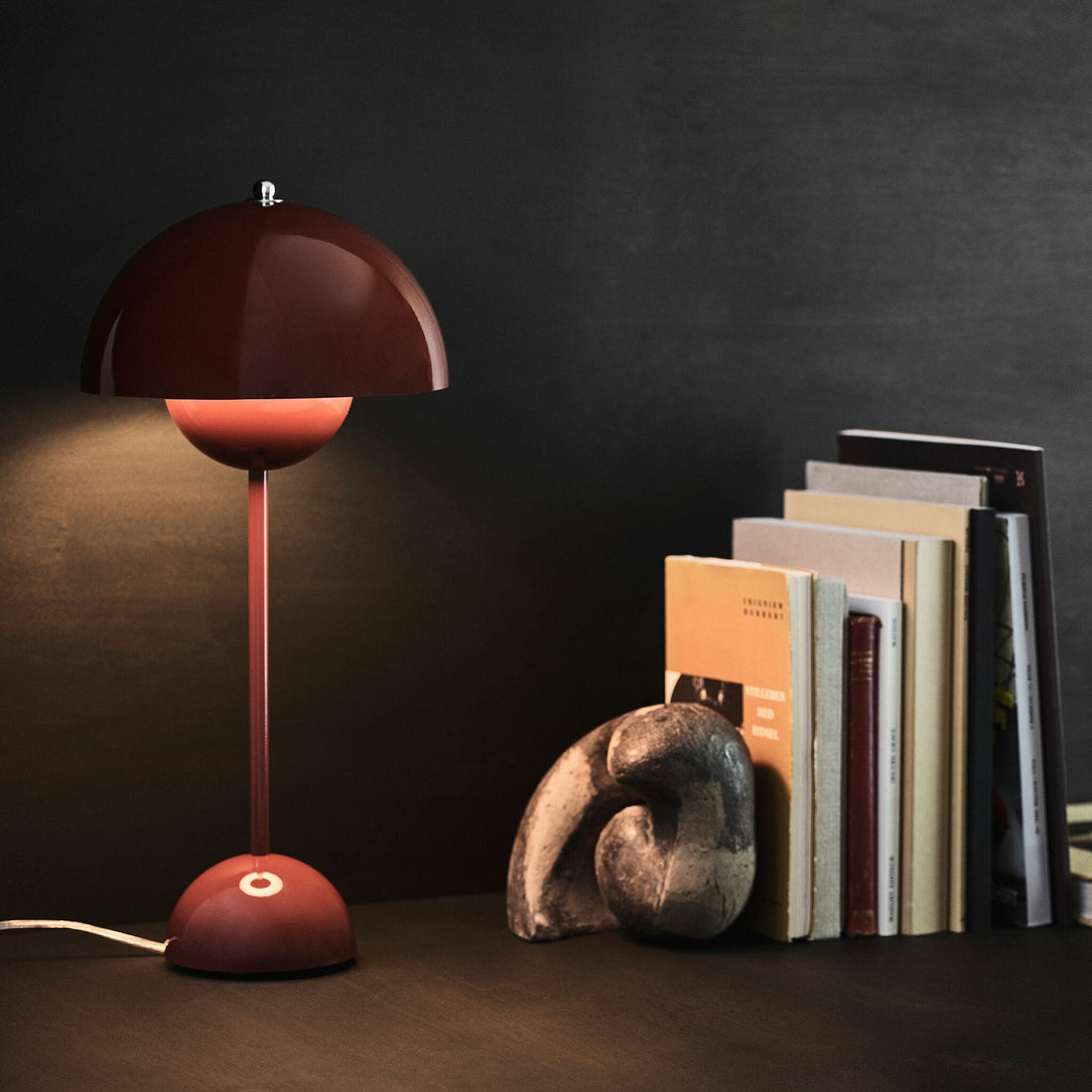
Our biggest accessory is nature itself and the view. They are the largest pictures in the room, and they're constantly changing. I like to combine them with table lamps. This indirect light is the most important light source in the house for me, because it creates a lovely, warm and cosy mood. Add a few carefully chosen textiles with different, sometimes coarse textures and a few candles. For me, fresh flowers are a must even in winter. They complete the room and make it feel like home.

Where is your favourite spot in the house on grey days, and why?
I actually have two. The first, where I like to drink my coffee in the morning and watch the birds in the garden, is the Roly Poly by Driade. And then there's a spot in the bedroom – with that wonderful view. I like to sit on the pouf there, let my gaze wander, meditate or watch the snowflakes falling from the sky.
Finally, we'd love to know what's currently at the top of your wish list, and why.
When I think of winter, I think of my office first. I spend a lot of time there and have a wonderful view, but the room is still quite bare. What matters to me in an office: it should be clearly structured and offer enough work surface. In short, it has to work. So on my list are an office chair (for example the HAY About A Chair AAC 155 or the &Tradition Rely HW31 swivel chair), a kilim rug and the Arum wall light by Ferm Living. I still need storage and a corner for thinking, too, but the concept for that isn't final yet.
Shop the look
Thank you so much, Sabrina, for your time and this fascinating conversation.